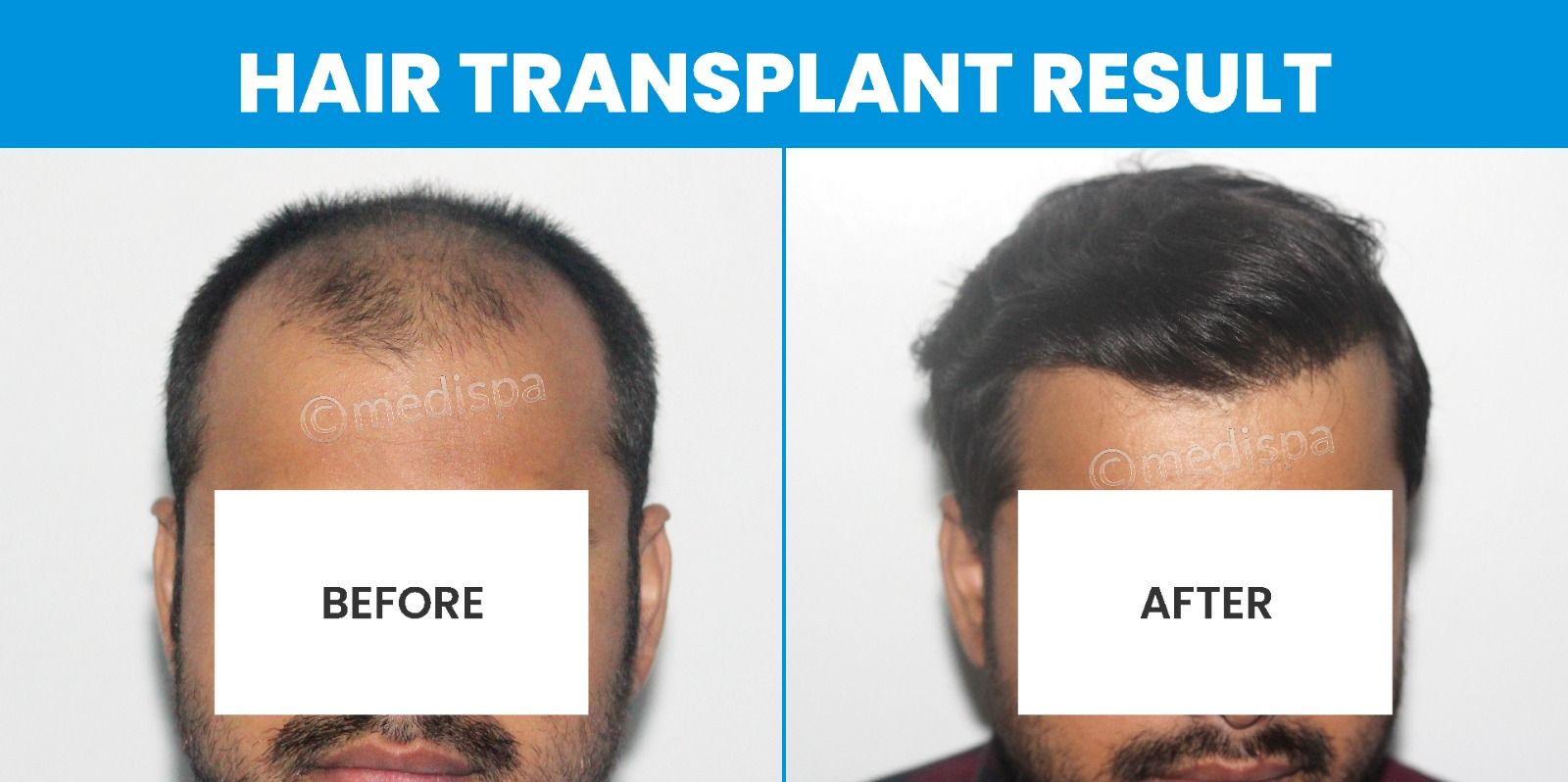
Grade 7 baldness is the highest grade of male pattern baldness under the Norwood classification. Here, the balding process is advanced, covering the area from the front towards the crown, leaving a thin strip of hair on either side and the back of the scalp. Treating this stage of baldness is hard; hence, it requires a lot of planning, the utmost surgical skill, and the right method of transplanting. So, when very little is there to work with, what is the next good step? Let’s unpack this further.
This stage of baldness presents three important challenges:
- Limited donor area – At this point, grafts must be harvested from the back and sides; these areas are often sparse.
- Extensive bald region – The area to be covered is so vast that nothing close to full density can be achieved, given a limitation on the number of grafts available.
- Realistic expectations – A balance between feasibility and aesthetic improvement must be struck.
For Hair Transplant in Delhi to succeed, especially in Grade 7 type cases, it must be first-class. Not all available techniques for hair transplanting can meet such demands. Some methods may fail in terms of graft survival, while others may not be the best for harvesting a super-high quantity. This is one of the deciding occasions where the choice of method means the difference between success and failure.
FUT vs. FUE: What Is Better?
FUT and FUE are two subspecialties within an otherwise stark landscape of hair restoration. However, other considerations come into play when discussing Grade 7 baldness.
FUT (Strip Method)
FUT refers to the excision of tissue in strip form from the donor area, followed by careful dissection of follicular units under a microscope.
Pros:
- Maximum grafts per sitting.
- Ideal for cases with limited donation.
- Grafts are less traumatised with microscopic dissection.
Cons:
- Linear scar at the donor site.
- Slightly prolonged period of recovery.
FUE (Punch Extraction)
Recovery of grafts from the scalp by way of a micropunch.
Pros:
- No linear scar.
- Quicker recovery.
- Less invasive.
Cons:
- Not appropriate when more grafts are required.
- Transection risk is higher if not performed by an expert.
When it comes to Grade 7 baldness, most of the time it is all about volume: lots of it. In this consideration, FUT has an edge over FUE, since it is possible to remove grafts numbering up to 4000 or even beyond, in one session-a great plus considering how limited the donor hair already is.
Combination Technique: The Gold Standard
Throughout Medispa, the technique most favoured in Grade 7 cases is the combination of FUT + FUE. This technique utilises the benefits of both techniques while minimising their drawbacks.
How it works:
- A bulk harvesting of grafts is done with FUT.
- FUE is then used to take additional grafts from stupendous body areas like the beard or chest (only if the scalp donor is not quite adequate).
It offers the highest coverage and naturally looking hairline.
In Delhi, this combined method is much sought after, with a clientele expecting high aesthetic results with minimum visible scarring. Surgeons like Dr. Suneet Soni developed this method, which incorporates the uniqueness of each transplant according to the state of the patient’s scalp, availability of a donor, and personal goals.
Is It Worth the Cost?
To put wide water between the two sides, Grade 7 hair transplantation is no cheap procedure. The difficulty of the procedure, time taken, and number of grafts exponentially inflate prices.
But, this is the essence: cost in a vacuum suggests nothing.
Hair Transplant Cost in Delhi varies widely concerning:
- The number of grafts required – often 4,000-6,000+ for Grade 7.
- The technique (FUT, FUE, or combined).
- The level of expertise by the surgeon.
While low-cost clinics sound appealing, these typically compromise an important aspect of the graft survival outcome or keep unqualified technicians appraising it. Medispa stands for the commitment of transparency and excellence. Price quote for grafts means an investment for you regarding accuracy, security, and artistry.
The Hair Transplant cost in Delhi for Grade 7 baldness typically starts from INR 90,000 and can go up to INR 2,00,000 or more, depending on the above-mentioned factors. While it’s a serious investment, the long-term payoff—both in appearance and confidence—is worth every rupee when done right.
Final Word: Choose Wisely, Not Hastily
Grade 7 baldness is tough, but not the end of the line. With cutting-edge techniques, trained hands, and noetic vision, the answer can just be in the affirmative. But don’t fall prey to the marketing gimmicks. Go with the clinic that follows ethics rather than just popularity and money.
If you consider Hair Transplant in Delhi for severe baldness, your method selection will outline the skin that will mark your success. And when it comes to Hair Transplant Cost in Delhi, remember—you’re not just buying hair; you’re buying back your identity.